Mont Ventoux Rosé

direction

The wines from Ventoux were often disregarded as rustic, and not noteworthy when compared to nearby Southern Rhone appellations. This changed about 20 years ago, with arrival of young talent, a rise in temperatures, and improved winemaking techniques.

Prior to starting at his mother’s estate in 1995, Sebastien Vicenti apprenticed under Rhône legend André Brunel in Châteauneuf-du-Pape, and was inspired by several natural wine greats like Didier Dagueneau, Clos Rougeard and Yvon Métras or Marcel Lapierre. Today they opt out of organic certification – “Sebastien has reservations over some of the products allowed within its rules; copper is usually the biggest source of arguments.”

Regardless, the domaine’s red wines are characterized by a deeply infused fruit profile, coupled with tight mineral core, that often benefits from aeration or aging in bottle. They are known for some of the best value available with ratings well above 90+ by renowned critiques.

This summertime rosé is made from 50% Cinsault, 25% Grenache, 25% Syrah, grown on sand. Raised entirely in tank with short lees contact, it is bright and aromatic ending with good mineralic cut.

Domaine-de-Fondreche-Rose_1024x1024

Vinous “Light bright pink. Aromas of fresh red fruits and pungent flowers are complicated by subtle garrigue and mineral nuances. Taut and nervy in the mouth, offering bitter cherry and strawberry flavors that show a vaguely bitter edge. Closes chewy and taut, delivering solid punch and bright, minerally persistence.” 88p

Jancis Robinson, Master of Wine “Definitely not like a Provençal rose. Good and racy with quite high acidity. Some saltiness. But not the fruitiest.” 16/20p

Robert Parker “Sourced from the estate’s sand and silt soils, the 2016 Ventoux Rose may be pale in hue but it’s no shrinking violet. It pumps out bold aromas of citrus and stone fruit plus hints of red berries. Six months on the lees gives it a rich texture but it never seems heavy, finishing with refreshing acid zip.” 89p


The rolling hills are made for great wine

The rigid rules for making Brunello di Montalcino –  100 % Sangiovese, minimum ageing for at least 48 months, of which 24 of them in barrels, before release – has been the prime motivation for officials to create the Rosso di Montalcino designation in the 1980s.

34

The press soon coined these – also pure Sangiovese but with one year ageing – baby Brunello, since many provided the character of a thoroughbred wine with a more fleshier fruit profile and 30-50% off the price tag. Today a good Rosso di Montalcino will certainly compare to premium Chianti or Vino Nobile di Montalcino, similar expressions of Sangiovese.

Collemattoni takes its name from the farmhouse, which, over time, has become the trademark of the winery and wines. The farmhouse dates back to at least 1672, a year in which it is registered in the parish archives as a family home. The house style can be meaty and rich in certain vintages with pronounced cherry, strawberry and floral aromas. Organic certification has been achieved in 2012, and a new winery building operational in 2015.

Their Rosso di Montalcino exudes great character; the fruitiness of a young wine with the intensity that only this terroir is capable of. Serve it with salami, middle ripe cheeses, first courses (mushroom soups, risotto and pasta dishes) and not hugely complex recipes including poultry or red meat.

Ian d’Agata of Vinous writes “Bright deep red. Inviting aromas of red and dark berries and violet. Sleek and lively, with forward plum and blueberry flavors lingering nicely on the perfumed textured finish. Knockout Rosso.” 92 pts for the 2018 vintage

Fun times in Waipara, New Zealand


Suppose most Riesling lovers on their way to becoming fanatics are those who have figured out the structured Alsatian from the finessed German and the fruit intense wines from Austria. Along the way they will also have tasted some Australian Riesling from the Clare and Eden Valley – you gotta love lime here – and lastly discover the ever improving New Zealand style.

tongue in groove crew

So is there really a style? The offerings we have come across covered the dry-to-off dry but rarely the sweet; while all have intense fruit and slightly higher alcohol levels than usual, it must be the combination of intense sunshine, cool nights, and skillful winemaking that compact the exquisite mandarin aromas with texture and phenolic ripeness.

Looking at the fun this bunch at Tongue in Groove have together, we ought to envy the 6 passionate friends who seem to have the time of their lives creating what they love in the place they have spent considerable time in. A little worry might be when the next earthquake around Christchurch is going to take place.

But this surely won’t sway let Lynnette Hudson from her focus to make some of the most delicious wines in Northern Canterbury. The 2014 Riesling has “spicy aromas of black and white pepper abound with a heady perfume of orange blossom, mandarin skin essence, grapefruit and melon with hints of apricot kernels. The palate is rich and full yet with an elegance and purity at the same time.”

Vineyard with a view – Cantine Nervi

_DSC2908 (2)

There comes a moment in any oenophile’s life, where the meaning of wine is understood. I mean the deep meaning, where a wine touches one’s soul, not just the gustatory pleasures. It could be a Bordeaux, or Burgundy, but certainly a mature wine. For me it has been a 1985 Gaja in 1999. Enjoyed in one of New York City’s old trattorias located on the East River – the name long forgotten, but the aromas, texture, sweet richness of this bottle was one of a kind ingrained in memory.

The following years where spend chasing every great producer and try grasp the significance or difference in terroir between Castiglione, La Marro and Monforte in Barolo. Later tasted many fine Barbaresco for a little while.

Nervi_GattinaraNebbiolo when young has not become my thing, and this despite an array of top producers making their way into Thailand. It is a grape which needs time; in bottle to develop, as well as in glass to open the intricate perfume. So please stack up your cellars with so many good vintages over the last 5-7 years.

This Nervi from Gattinara will not have the finesse of the Langhe, but an honest earthiness, and soulful in its rusticity. It is coming around nicely, so try serve it coolish around 15-16C to tighten the frame, and enjoy perhaps with a nice risotto. A good one is the juicy and modern truffled mushroom risotto at Quince Eatery & Bar. Sukhumvit Soi 45.

Clos Cibonne, the crown jewel of Provence

Clos+Cibonne+Cotes+de+Provence+rose+2014++600

The property of Clos Cibonne dates back to 1797 when the Roux Family purchased it from Jean Baptiste de Cibon, captain of the royal marines of Louis XVI. In 1930, André Roux modernized the winery in order to pursue his goal of producing top quality wines at the estate. This revival ignited an era of fame for the rosés of Clos Cibonne.

In the 1980s, hard times fell upon the estate and it drifted without clear direction until Bridget, André Roux’s granddaughter, and her husband, Claude Deforge, took it over in the late 1990s. Their immediate goal was to bring the estate back to its former grandeur. By renovating the cellars while preserving the tradition of aging in old foudres, the family began to reestablish the vaunted reputation of the domaine. Thanks to their efforts Clos Cibonne once again lives up to its standing as one of the 18 Cru Classés in Côtes de Provence.

The heart of the estate is their Tibouren. André Roux was a great fan of this native varietal and believed it to be the ideal grape for the region. As part of his revitalization he replaced all of the estate’s Mourvèdre with Tibouren. Clos Cibonne soon became synonymous with Tibouren and received special permission from the A.O.C. to list the grape on its labels.

The estate’s 15 hectares of vineyards are located a mere 800 meters from the coast and are surrounded by hillsides in the base of a bowl that faces the sea. This topography creates air circulation that allows for perfect maturation of the grapes and helps to reduce vintage variation. After harvest, the wines are fermented in stainless steel and then aged under fleurette (a thin veil of yeast) in 100-year-old, 500L foudres.

Clos Cibonne crafts a wine that is completely its own through combining a rare grape with a unique aging process. There are two rosés currently available from the estate: the classic rosé and the Cuvée Spéciale des Vignettes that is sourced only from the estate’s oldest vines. These two wines are complemented by the Cuvée Spéciale Tibouren, a unique red wine made primarily from Tibouren.

Rosé Cuvée des Vignettes

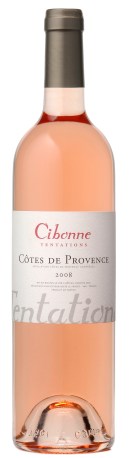
These highly recommendable gastronomic wines also have a little sibling called Cuvée Tentations, which is made from purchased Grenache, Cinsault, Syrah and some Tibouren. The delicate and perfumed wine is more suitable for casual, day time drinking by the beach and simply tasty grilled fish.

Cuvée Tentations Rosé

Vini Pra, a Soave specialist excelling in reds too

The Soave Classico region with its volcanic soil is one of the areas making some of the best Italian white wines that are mineral laden, and often gently fruited, while remaining stimulating. One of the top 5 names to remember would certainly include that of Graziano Pra, who helped re-energize the Soave DOCG through his efforts with the Vignaioli del Soave Indipendente.

bottiglie

In 2001, he decided to plant vines in the area sandwiched between the Valpolicella and Soave Classico zones. The soil here is glacial with southeast exposure and elevation of 450 meters. The resulting wines, Valpolicella, the Morandina Ripasso, as well as Amarone are much more red fruited than usual, at times reminiscent of Grenache with kirsch liqueur aromatics.

team

For the Ripasso Morandina, the traditional blend of Corvina, Corvinone, Rondinella, and Oseleta- is fermented and then pressed through the grape skins of Amarone for 2nd fermentation to gain more structure, texture and bouquet. This then is then matured for 18 months, partly in barriques, partly in Allier oak casks.

Pra-Territory-map

For the 2013 vintage, James Suckling described “This has an exuberant nose of blackberries with wild strawberries and dried herbs. The palate is full and juicy, showing polished tannins and a clean finish. Very well-made. A traditional red blend from Valpolicella with corvina, corvinone, rondinella and oseleta. Amazing Valpo! 94 points

Ripasso no anno


Contino, the first single vineyard estate in Rioja

Contino is a single-estate bodega (62 ha of vineyards) based in a 200-year-old farmhouse just outside the town of Laguardia in the Alavesa region. The estate’s name comes from the royal guard of 100 soldiers who guarded the monarch. The label is emblazoned with the bust of San Gregorio, the patron saint and protector of vineyards.

Contino+sangregorio

José Madrazo Real de Asúa (father of Contino’s current winemaker, Jesús Madrazo) established the estate while serving as CVNE’s technical director in 1974. The idea was to create one of the first single estate bodegas in the Rioja region, in direct contrast to the Rioja tradition of blending grapes from different regions and sites. CVNE had long been sourcing fruit from the Contino site for its Viña Real, but decided to purchase the entire plot around the farmhouse and plant it all to vines (a large portion of the land still had other crops planted at the time).

Jesús Madrazo spent much of his childhood at the bodega and has intimate exposure to the terroir and vinification practices, so it’s little wonder that his work at Contino is held in such high regard. While the bulk of the vines planted at Contino are Tempranillo (85%), Madrazo has also been a champion of the Graciano grape which comprises the bulk of the remaining planting. The balance is planted to Garnacha, Mazuelo and Viura.

Luis Gutierrez of Robert Parker describes “the nose is unmistakably Rioja; balsamic and ripe with lush Tempranillo fruit, plenty of spices and hints of leather. The palate shows a powerful, ripe and persistent wine with fine-grained tannins balanced by enough acidity and freshness. It has great balance between modernity and tradition, showing true to its origins.”

Domaine de la Cote, Santa Rita Hills

RefrigeratedSunlight

The International Guild of Sommelier explains that wines coming from marginal or cool climate sites tend to get a lot of “wind exposure generally lead to grapes with thicker skins, thereby changing the skin-to-juice ratio of the fruit. Grapes with thicker skins tend to produce more concentrated wines even without excess purposeful extraction in the cellar. The thicker skins can offer further benefit: since skin tannin is more pleasant and less bitter than seed tannin, thicker skins can create better balance in the final wine. Thicker skins help produce a structured wine with the potential to age without relying as heavily on harsher seed tannin. As a result, wines from such conditions often have the double benefit of the structure to age alongside approachability in their youth.”

And this is the reason why Rajat and Sashi have been fascinated by the location of Domaine de la Côte. The unique change in topography here, where the mountain range spreads from west to east, allows the daily cool fog to roll in from the Pacific Ocean.

santa rita

Their Santa Rita Hills Pinot Noir is a blend of all the estate vineyards. 50% of the grapes are fermented whole bunch with 0% new oak used to mature in barrel. The wine is pale red in color with perfumey flavors of Bing cherry, all spice and leather. On the palate it is soft textured and finished quite silky. 1,100 cases produced.

“I found all of the wines to be outstanding, they had an unusual mix of cool-climate aromatics to go with a higher pH, rounder, softer profile on the palate, with distinct saline-like qualities.”- Jeb Dunnuck for Robert Parker

050716-WG_PACKSHOT_300x350-PX-Domaine-de-la-cote-santa-rita

Additionally, the estate also bottles a more approachable wine that is easier to enjoy in its youth.  Silky, with lower alcohol yet remaining flavorful,  the Lompoc Wine Co is named after the town where the winery is situated and provides great value for those that want more subtlety from the variety.

lompoc wine co